How to Run Google Ads for Landscapers: A Complete Guide
Learn how to set up Google Ads for landscapers, attract qualified leads, and win more local jobs with this step-by-step guide.

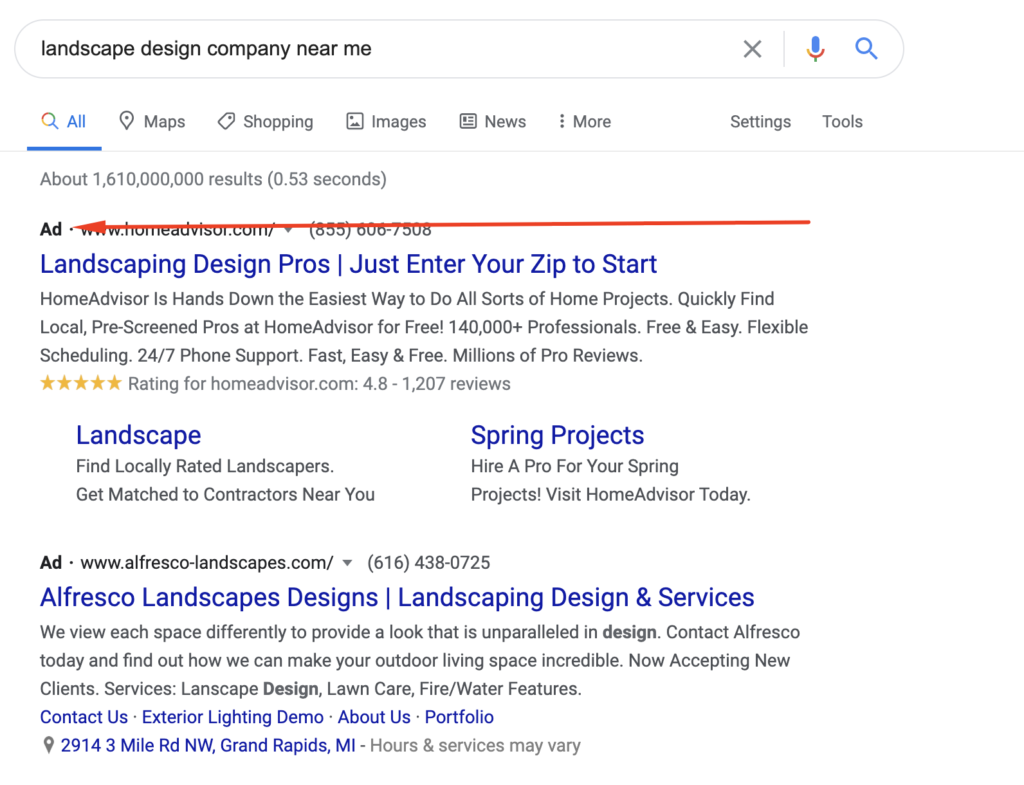
Landscapers lose jobs they should be winning every day. Not because the work isn’t good, but because another company shows up louder, faster, or more “hire-ready” in Google. Homeowners search with urgency: spring cleanup this week, sod installation near me, lawn care starting Monday. If you’re not there, you’re invisible.
This guide shows you how to run ads on Google in a way that cuts waste and helps you win more of the work you want.
Let’s dig in.
Why Google Ads Works So Well for Landscaping Companies
Google Ads meets homeowners at their moment of need. These aren’t “idea seekers”; they’re buyers:
- “spring yard cleanup near me”
- “weekly lawn mowing [city]”
- “mulch installation service”
- “retaining wall repair”
- “sod installation this week”
- “irrigation startup near me”
These searches come from people ready to schedule. Google Ads puts you in front of them before your competitors get the call.
It also pairs perfectly with SEO. Your inbound engine fires on all cylinders when both channels run together.
Before You Start: What You Need
A quick pre-flight checklist:
- Access to your website
- A phone number someone actually answers
- List of cities and service areas
- Seasonal availability windows
- Real project photos
- A short service list for ad + landing page alignment
Once you’ve got this, you’re ready to build a money-making campaign.
What to Expect: Landscaping Google Ads Benchmarks
Most landscapers want to know: Is this expensive? Does it actually work? What do other companies see?
Here’s a realistic snapshot across the industry:
- Average cost per click (CPC): $3–$9
- Average conversion rate: 10%–25%
- Cost per lead (CPA): $25–$60
- Peak demand: March–June and September–November
These aren’t “good or bad” numbers by themselves; they’re just the landscape (see what we did there?). With tight targeting and strong landing pages, many landscapers outperform these ranges.
Step 1: Set Up the Foundation (This Saves You Money Later)
Landscapers often skip the foundation because they want leads now. We get it, but that rush usually burns money.
Create Your Google Ads Account
Choose Expert Mode. It unlocks all the levers that keep your spend controlled and your targeting precise.
Install Tracking Before Spending a Dollar
Track the actions that lead to booked jobs, not just link clicks:
- Phone calls
- Form fills
- “Book Estimate” clicks
Add:
- Google Tag Manager
- Google Analytics 4
- Google Ads conversion tracking
Without tracking, you’re only guessing if your ads worked, and guessing gets expensive.
Link Your Google Business Profile
This pulls in reviews, your address, and your hours, which raises click-through rates and trust.
Step 2: Choose the Right Campaign Type
Start with Search Campaigns. They capture homeowners who want a landscaper now.
Add these later as you grow:
- Local Services Ads for high-intent calls
- Performance Max once you have solid conversion data
- Remarketing to stay visible after page visits
But Search is your workhorse.
Step 3: Structure Your Campaigns Like a Landscaping Company
Most landscapers run one big “Landscaping” campaign with 50 mixed keywords. That’s how budgets disappear. Use clean, service-based segmentation instead.
Campaign 1: Landscaping Services
Ad Groups:
- landscape design
- front yard landscaping
- backyard landscaping
- planting services
- drainage and grading
Campaign 2: Lawn Care & Maintenance
Ad Groups:
- lawn mowing
- lawn care service
- fertilization and weed control
- aeration
- dethatching
- weekly mowing service
Campaign 3: Seasonal Cleanup
Ad Groups:
- spring yard cleanup
- fall cleanup
- leaf removal
- debris hauling
Campaign 4: Hardscaping
Ad Groups:
- patio installation
- retaining walls
- walkways
- fire pit installation
Campaign 5: Irrigation
Ad Groups:
- irrigation startup
- irrigation blowout/winterization
- irrigation repair
Example Build: Spring Cleanup Campaign
Campaign: Spring Cleanup – [City]
Ad Groups:
- spring cleanup near me
- yard debris removal
- leaf removal
- post-winter cleanup
Landing Page Should Include:
Before/after photos, 24–48 hour estimate promise, city-specific reviews, list of neighborhoods served.
Step 4: Pick Keywords That Bring You Buyers, Not Browsers
High-intent keywords to prioritize:
- lawn care near me
- sod installation
- mulch installation service
- spring yard cleanup
- retaining wall repair
- irrigation repair
- weekly lawn mowing
- landscape design and install
Match Types That Work
- Exact Match: For expensive/high-value terms
- Phrase Match: Your bread and butter
- Broad Match: Save it for when your account has strong conversion data
Negative Keywords That Save Your Budget
Add these immediately:
- DIY
- ideas
- jobs
- cheap
- wholesale
- equipment
- how to
This alone can cut hundreds of dollars in wasted spend.
Step 5: Write Ads That Answer a Homeowner’s Real Questions
Homeowners want clarity, not poetry.
Strong Headlines
- Sod installation in [City]
- Weekly lawn mowing available
- Retaining wall repair experts in [City]
- Spring cleanup schedules open
- Fast landscaping estimates
Descriptions That Build Trust
- Book a fast estimate. Clear pricing, reliable work, and real results.
- Get a yard you’re proud of with a local crew homeowners recommend.
Add Every Asset Google Allows
Assets make your ads bigger and cheaper:
- sitelinks
- call extensions
- location extensions
- pricing
- callouts (“licensed and insured,” “family-owned,” “free estimate”)
More assets → higher visibility → lower cost per click.
Step 6: Bid Smart Without Letting Google Run the Show
Start simple:
- Manual CPC or Maximize Clicks (with a cap) while Google learns
- Switch to Maximize Conversions after ~20–30 conversions
- Use Target CPA when you want a predictable cost per lead
Avoid setting a tight CPA in the beginning; give the algorithm room to learn.
Step 7: Budget by Service Type, Not a Flat Number
Different services attract different costs.
Suggested Starting Budgets
- Lawn mowing / maintenance: $15–$30/day
- Seasonal cleanup: $20–$40/day
- Sod/planting: $25–$50/day
- Hardscaping: $40–$100/day
- Irrigation: $20–$40/day
Seasonal Strategy
- Spring cleanup: Ramp in January–May
- Aeration/overseeding: August–October
- Sod: March–June
- Irrigation blowouts: September–November
- Hardscaping consults: Promote heavily in winter to fill spring
Landscapers who budget seasonally win more jobs with less spend.
Step 8: Build Landing Pages That Actually Convert
If your sod ad points to a homepage from 2012, your lead just left. Every ad needs a matching landing page.
Include:
- A clear service headline (“Sod Installation in [City]”)
- Before/after project photos
- City-specific reviews
- What’s included in the service
- A short form with name, phone, service
- Click-to-call button
- Service area list
- Fast-estimate promise
Conversion Boosters
- Seasonal messaging (“Spring schedules filling fast”)
- Average project timelines
- Clear start-at pricing if appropriate
- Crew photos
Better landing pages instantly drop your cost per lead.
Step 9: Tune Your Campaign Weekly (This Is Where the Wins Happen)
Google Ads isn’t a crockpot. You can’t “set it and forget it.”
Weekly Tasks
- Add new negative keywords
- Pause low performers
- Shift budget to winning ad groups
- Test headlines
- Adjust bids
Monthly Tasks
- Review conversion trends
- Update landing pages
- Add new seasonal campaigns
- Review cost per lead
- Look for city-based performance differences
Landscapers who tune their campaigns every week consistently outperform those who don’t.
Common Mistakes We Fix All the Time
- Bidding on “landscaping ideas” and paying for Pinterest traffic
- Using a homepage instead of a service page
- Letting Google auto-apply recommendations
- Running one campaign with 73 keywords
- Forgetting negative keywords
- Tracking… nothing
- Not answering the phone
You avoid 90% of problems by avoiding this list.
Troubleshooting: If Your Ads Aren’t Working
- Lots of clicks, no leads: Bad landing page match or slow load times.
- High cost per click: Too broad, missing negatives, or poor ad copy.
- Low impression share: Budget too low or bids too conservative.
- Sudden drop in conversions: GBP issue, tracking issue, or landing page changes.
- Calls but no booked jobs: Your call handling needs improvement.
Step 10: Combine Google Ads + SEO for Maximum Impact
Google Ads gives speed. SEO gives staying power. Together, they help you show up:
- in ads
- in the map pack
- in organic results
- in AI-generated answers
The landscapers who win most consistently run both.
Ready to Book More of the Jobs You Want?
Run Google Ads with a crew that already speaks “landscaping.” Avalanche builds inbound systems that help landscapers show up in more places, earn more qualified leads, and stop losing work to competitors with stronger visibility.
Want a free look at how your business appears in Google right now? We’ll review your website, search visibility, service pages, and local presence, and show you real opportunities to grow.
Apply for a free SEO strategy audit today.
Ready to Get More Leads?
This guide is based on years of experience helping landscapers turn their websites into lead-generating machines. Feel free to take and use it with our blessings — but if you'd rather hire a relentless team of experts so you can get back out in clients' yards, let's talk.
Schedule Intro Call